Joint pain is one of the most common problems seniors face. Knees may feel stiff in the morning. Hands may ache when holding a cup. Hips or shoulders may hurt after a short walk. These discomforts can make daily life harder and sometimes take away the joy from simple activities.
While medical treatment is important, many seniors also look for gentle home remedies to ease joint pain. Natural approaches can support comfort, improve movement, and help you feel more in control of your health. The key is choosing safe methods and listening carefully to your body.
Understanding Why Joints Hurt With Age
As we grow older, the cartilage that cushions our joints slowly wears down. Cartilage acts like a soft pad between bones. When it becomes thinner, bones may rub against each other, causing pain and stiffness.
Conditions like arthritis are common in seniors. Weather changes, lack of movement, or past injuries can also make joint pain worse. Some days may feel better than others.
It is important to understand that joint pain is not just “a normal part of aging” that must be suffered in silence. While some discomfort is common, there are many ways to reduce pain and improve comfort at home.
The Healing Power of Warmth
Heat is one of the simplest and most effective home remedies for joint pain. Warmth helps relax muscles and increase blood flow to the area. This can reduce stiffness and ease discomfort.
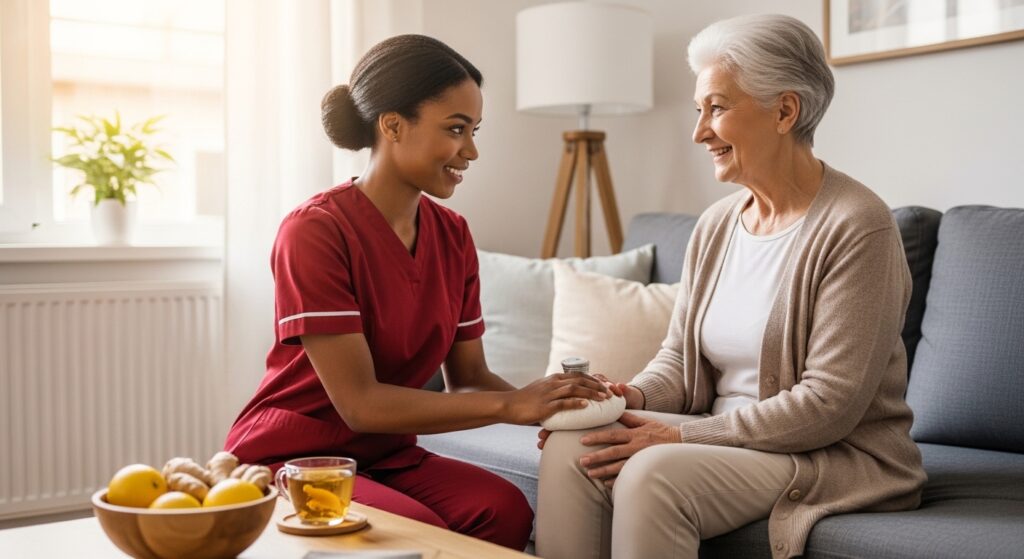
A warm towel, heating pad, or warm water bottle placed on sore joints can bring relief. A warm shower or bath can also soothe the whole body, especially in the morning when joints feel stiff.
Many seniors find that starting the day with gentle warmth makes movement easier. Just be careful not to use heat that is too hot, and avoid sleeping with a heating pad on.
Cold Therapy for Swelling
While heat helps with stiffness, cold can reduce swelling and sharp pain. If a joint feels swollen or inflamed, applying a cold pack wrapped in a cloth can help calm irritation.
Cold therapy works by narrowing blood vessels and reducing inflammation. It is especially helpful after activity if your joints feel sore.
Use cold for short periods, about fifteen to twenty minutes at a time. Never place ice directly on the skin, as it can cause damage.
Knowing when to use heat and when to use cold can make a big difference in managing joint discomfort.
Gentle Movement and Stretching
It may seem strange, but one of the best remedies for joint pain is movement. When joints stay still for too long, they become stiffer and more painful.
Gentle stretching and low-impact exercises can improve flexibility and reduce discomfort. Simple activities like walking, light yoga, or swimming can keep joints moving without putting too much pressure on them.
Chair exercises are also a safe option for seniors with limited mobility. Even small movements help keep blood flowing and muscles strong.
The key is to move regularly but gently. Avoid pushing through severe pain. Listen to your body and take breaks when needed.
The Role of Healthy Weight
Extra weight puts more pressure on joints, especially knees and hips. Even a small amount of weight loss can reduce strain and improve comfort.
A balanced diet rich in fruits, vegetables, whole grains, and lean proteins supports overall joint health. Drinking enough water also helps keep tissues hydrated.
While weight loss can feel challenging, small changes over time can make a noticeable difference in joint pain.
Natural Anti-Inflammatory Foods
Certain foods are known for their anti-inflammatory properties. Adding these to your meals may help reduce joint pain naturally.
Foods rich in omega-3 fatty acids, such as fish, walnuts, and flaxseeds, support joint health. Colorful fruits and vegetables contain antioxidants that protect the body from damage.
Spices like turmeric and ginger are often used in home remedies. Many seniors enjoy adding these to tea or meals. While these natural ingredients are not a cure, they may support overall comfort.
Always speak with your doctor before starting any new supplements, especially if you take medication.
Massage and Gentle Touch
Massage can improve circulation and relax tight muscles around painful joints. A gentle hand massage can ease discomfort in fingers and wrists. Light pressure around knees or shoulders may also bring relief.
You can massage yourself using warm oil or ask a trusted family member for help. There are also simple handheld massagers designed for seniors.
Massage does more than reduce pain. It can also reduce stress, which sometimes makes pain feel worse.
The Comfort of Supportive Tools
Using supportive tools at home can reduce strain on painful joints. Cushioned shoes with good arch support protect knees and hips. Support braces for knees or wrists may provide stability during movement.
Simple changes in the home can also help. Using chairs with armrests makes it easier to stand. Adding handrails in bathrooms increases safety and reduces pressure on joints.
These small adjustments can make daily activities more comfortable and prevent further strain.
The Importance of Rest
While movement is important, rest is equally necessary. Overusing painful joints can make symptoms worse.
Pay attention to signs that your body needs a break. If a joint feels very sore, allow time for recovery. Balance activity with rest throughout the day.
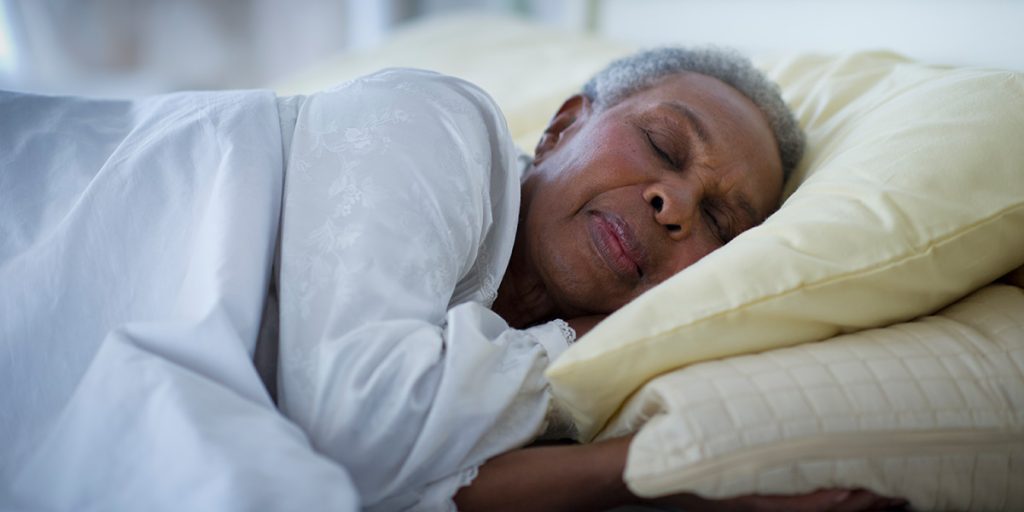
Good sleep also plays a big role in managing pain. A comfortable mattress and supportive pillows can reduce pressure on joints during the night.
When your body is well-rested, it handles pain more effectively.
Relaxation and Stress Reduction
Stress can make pain feel stronger. When you are tense or anxious, muscles tighten, which may increase discomfort.
Simple relaxation techniques can help. Deep breathing, listening to calming music, prayer, or quiet reflection can reduce tension.
Spending time outdoors in fresh air and sunlight also improves mood and overall well-being.
When your mind feels calm, your body often feels better too.
When to Seek Medical Advice
Home remedies can provide comfort, but they are not a replacement for medical care. If joint pain is severe, sudden, or getting worse, it is important to consult a doctor.
Persistent swelling, redness, or warmth in a joint may signal a more serious issue. Early treatment can prevent further damage.
Combining medical guidance with safe home remedies often gives the best results.
Conclusion:
Joint pain can feel frustrating, especially when it limits your independence. But there are many safe and simple home remedies that can ease discomfort and improve your daily life.
Warmth, cold therapy, gentle movement, healthy eating, massage, and proper rest all work together to support joint health. Small changes can lead to noticeable improvements over time.
Most importantly, be patient and kind to yourself. Your body has carried you through many years of life. It deserves care and attention.
With the right balance of home remedies and medical advice, you can manage joint pain and continue enjoying the activities that bring meaning and joy to your life.